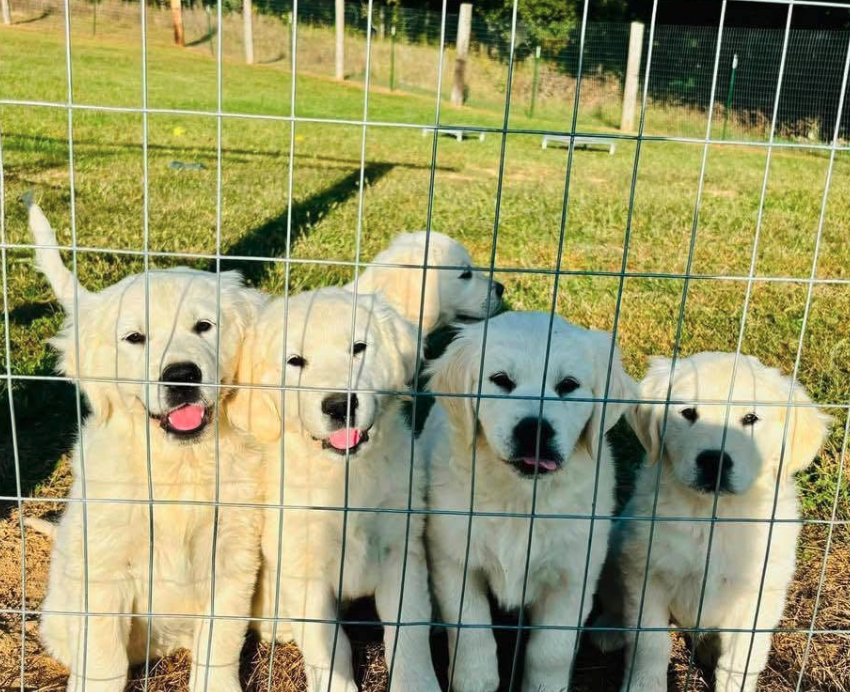
By Pamela Steward · Kanine Country Club · Oct 20, 2026
The weeks after your puppy comes home are the most important for building a calm, confident adult dog. Socialization simply means helping your puppy meet the world in a good way: new people, sounds, surfaces and animals, always at a pace they can handle. At Kanine Country Club in Sperry, Iowa, our puppies grow up around people and other dogs from the start. Here is how to keep that going once they are home.
Why early socialization matters
Puppies go through a sensitive period in the first few months of life when they are especially open to new experiences. What they learn to see as normal during that window tends to stick. A puppy who meets friendly people, hears household noises and rides in the car calmly is likely to grow into a dog who handles surprises well.
A puppy who misses these experiences may become fearful or overexcited later. Labs and Goldens are naturally sociable, but they still need guidance to turn that friendly nature into good manners.
Start at home
You do not have to go anywhere to socialize a puppy. Let them hear the vacuum, the dishwasher, the doorbell and the TV at a low volume. Walk them across tile, carpet, grass and gravel. Gently handle their paws, ears and mouth so that vet visits and grooming feel normal.
Pair each new thing with a treat and a cheerful voice. If your puppy seems unsure, add distance, lower the intensity and let them approach in their own time. Never force an introduction.
Meeting people
Invite friends and family over, one or two at a time. Ask visitors to be calm, let the puppy come to them and offer a treat. Include a range of people: men and women, children, people in hats or sunglasses, and someone carrying a bag or umbrella.
Supervise every meeting with children. Show kids how to pet gently, sit on the floor and avoid grabbing or hugging. A puppy that has good experiences with kids early is more likely to be patient with them as an adult.
Vaccines and safe outings
Ask your vet when your puppy can safely visit public places. Until the vaccine series is finished, avoid dog parks, pet store floors and places where many unknown dogs go. That does not mean staying home.
Carry your puppy through a hardware store entrance, sit on a bench outside a coffee shop or have a friend with a healthy, vaccinated dog visit your yard. A car ride to a quiet spot to watch traffic from a distance is also useful. Short, upbeat outings build confidence without risking health.
Meeting other dogs
Choose calm, healthy, vaccinated adult dogs for first introductions. Keep meetings short and relaxed, with loose leashes. Rough play with an unknown adolescent dog can frighten a puppy, so be ready to step in.
Puppy classes led by a good trainer are another safe option. They offer supervised play and basic manners at the same time, and they help you read your puppy’s body language.
Read your puppy’s body language
A relaxed puppy has a loose body, soft eyes and a wagging tail. A worried puppy may tuck the tail, pin the ears back, yawn, lick their lips or try to hide. If you see those signs, calmly create distance and let your puppy recover.
It is better to keep an experience small and positive than to push through it. One scary moment can stay with a puppy for a long time, so end each outing on a good note.
Sounds, cars and the vet
Plan a few gentle practice runs for the things every dog meets. Take short car rides that end somewhere fun, not just at the vet. Play recordings of thunder or fireworks very quietly while your puppy eats, and raise the volume over several days only if they stay relaxed.
Visit the vet’s office for a quick hello and a treat with no exam. A puppy who has happy memories of the clinic is far easier to handle when a real visit comes.
Keep it up as they grow
Socialization does not end at sixteen weeks. Keep introducing new places and people through the first year and beyond. Regular walks, car rides and visits to friendly homes keep your dog confident.
If you plan to board your dog someday, a puppy who has met new people and slept somewhere unfamiliar adjusts far more easily. Short practice stays with friends or family help your dog learn that being away from home can be fun.
Common socialization mistakes
Flooding is the most common one: taking a young puppy to a busy festival or crowded dog park and hoping they will get used to it. A puppy who is overwhelmed learns fear, not confidence. Keep each new experience small, and let your puppy set the speed.
Another mistake is letting a puppy greet every dog and person on a walk. Good manners matter too. Teach your puppy that calm behavior earns attention, and that checking in with you is more rewarding than rushing over to strangers.
Ready for a puppy?
Thinking about a Lab or Golden puppy? See our puppies, call 319-759-4210 or message us on Facebook. More answers are in our FAQ, and you can find us in Sperry.