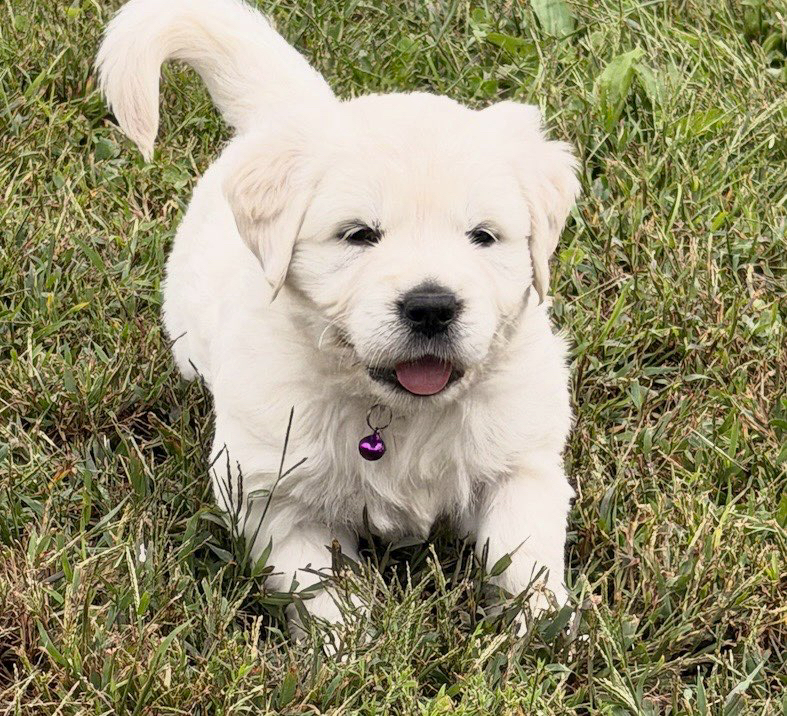
By Pamela Steward · Kanine Country Club · Oct 20, 2026
Nothing tests a new puppy owner like the first week of house training. The good news is that Labradors and Golden Retrievers are smart, eager to please and quick to learn what earns praise. With a steady routine and a lot of patience, most families see real progress within a few weeks. At Kanine Country Club in Sperry, Iowa, we start good habits before our puppies go home, and this is the approach we suggest you continue.
Set a schedule and stick to it
House training is mostly about timing. Puppies need to go out first thing in the morning, after every meal, after every nap, after play and right before bed. In between, young puppies may need a break every hour or two. Put these trips on your calendar for the first few weeks, and you will prevent far more accidents than you will have to clean up.
Feed at the same times each day. A predictable intake gives you a predictable output, and that makes it far easier to know when your puppy needs to go.
Pick a spot and use a cue
Take your puppy to the same area of the yard every time. The smells there will remind them what to do. Walk calmly and stay with them, but do not play until they have finished. Use a simple word such as outside or go potty as they start, and your puppy will learn to connect the word with the action.
Always go out on a leash at first so you can stay focused. If nothing happens in a few minutes, go back inside, keep your puppy in the crate or close by, and try again soon. Do not give free run of the house until they have gone.
Reward right away
The reward has to come within seconds. When your puppy finishes, praise warmly and hand over a small treat while still outside. If you wait until you are back in the house, your puppy will not link the treat to the right behavior.
Over time you can phase out the treats and keep the praise. Many Labs and Goldens work for a happy voice alone, though most will not turn down a treat.
Watch for the signs
Puppies give signals before they go. Sniffing the floor, circling, whining, wandering off or suddenly stopping play are all clues. When you see one, calmly scoop up your puppy and head outside. Do not wait to be sure.
Keep your puppy within sight indoors. Use a leash tied to your belt, a playpen or a gate to keep them near you. A puppy who cannot sneak off to another room cannot have a hidden accident.
Handle accidents calmly
Accidents will happen. If you catch your puppy in the act, interrupt with a calm sound, carry them outside and praise if they finish there. Never scold or rub their nose in a mess. It does not teach what you want and it can make puppies afraid to go in front of you.
Clean indoor accidents with an enzyme cleaner made for pets. Regular household cleaners may leave a scent that tells your puppy to return to the same spot.
Make nights manageable
Take your puppy out right before bed and expect to go out once or twice during the night at first. Keep these trips short and quiet: no play, no talking, just out and back to bed. Most puppies can sleep longer stretches as they grow, often through the night by sixteen weeks or so.
Using the crate at night helps because puppies avoid soiling where they sleep. Keep the crate close to your bed at first so you can hear when your puppy wakes.
Be realistic about the timeline
Many puppies grasp the idea in a few weeks, but fully reliable habits often take several months. Setbacks are common around adolescence, when a puppy suddenly seems to forget. Return to the basics, keep the routine and give praise freely.
If your puppy has frequent accidents despite a good routine, or seems to be urinating a lot or straining, check in with your vet. Medical problems can look like training problems.
What if you work during the day?
Young puppies cannot wait eight hours. If you work, arrange for someone to let your puppy out at midday, at least in the early weeks. A family member, neighbor or dog walker can make all the difference.
Use a safe, puppy-proofed space with a bed, water and a pad or turf area only if you really cannot be there, and plan to move toward outdoor-only habits as soon as you can. Consistency is what turns a puppy into a clean, reliable adult dog.
Ready for a puppy?
Thinking about a Lab or Golden puppy? See our puppies, call 319-759-4210 or message us on Facebook. More answers are in our FAQ, and you can find us in Sperry.