By Pamela Steward · Kanine Country Club · Oct 20, 2026
Labradors and Golden Retrievers were bred to work: retrieving game, covering ground and staying with their people all day. Today most live as family pets, but that energy did not go away. A Lab or Golden that does not get enough activity can become bored, noisy or destructive. A dog that gets the right amount tends to be a calm, happy housemate. At Kanine Country Club in Sperry, Iowa, we see this every day, and here is how to plan for it.
A good starting point for adults
Most healthy adult Labs and Goldens do well with at least an hour of activity a day, and many young adults want more. That can include walks, fetch, swimming and play with other dogs. Splitting it into two or three sessions suits most dogs better than one long outing.
Every dog is different. Watch your own dog. A dog who settles easily in the evening is probably getting enough. A dog who paces, chews or barks for attention may need more.
Exercise for puppies
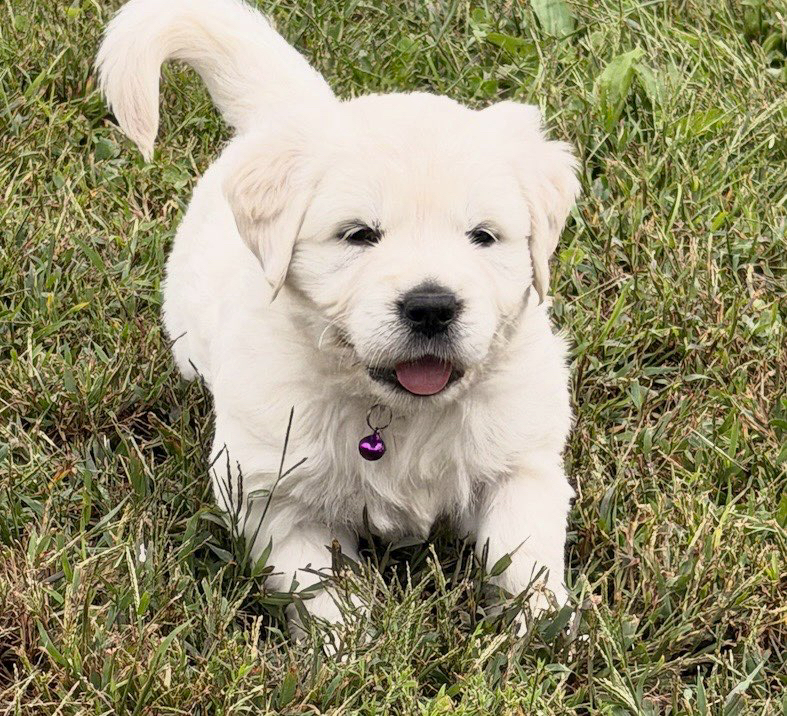
Growing puppies need movement but also lots of rest. Their joints and growth plates are still developing, so avoid forced running, long hikes and repeated jumping until your vet says they are ready. Short walks, free play in the yard and gentle games are the best choices.
A common rule of thumb is about five minutes of structured exercise per month of age, up to twice a day. Free play is separate from that and should be at your puppy’s own pace. Ask your vet what suits your puppy.
Great activities for Labs and Goldens
Fetch is the classic, and these breeds usually love it. Swimming is wonderful because it is easy on the joints. Walks with a sniffing break let them explore with their noses. Hiking, playing with a friendly dog and learning new tricks all count too.
Try varying the routine. A different route or a new game keeps things interesting for a smart dog.
Do not forget mental exercise
A tired body is good, but a tired mind helps too. Puzzle feeders, scent games, hide and seek with treats and short training sessions use brainpower. Ten minutes of training can tire a dog as much as a long walk.
On rainy or icy days, indoor games make a good substitute. Teach a new trick, hide toys around the house or let your dog work for a meal.
Watch the weather
Labs and Goldens have thick coats and can overheat in summer. Exercise early or late in the day, bring water and avoid hot pavement that can burn paws. In winter, check paws for ice and salt, and shorten outings in extreme cold.
Know the signs of overheating: heavy panting, drooling, weakness and glazed eyes. Move to shade, offer water and call your vet if signs do not ease quickly.
Protect their joints and weight
These breeds can be prone to joint problems and weight gain. Keep your dog lean, since extra weight adds stress to hips and elbows. Warm up with a gentle walk before hard play, and avoid constant high-impact jumping.
If you see limping, stiffness after rest or reluctance to play, talk to your vet.
Signs your dog needs more
Chewing furniture, digging, constant barking, restlessness at night and hyper behavior indoors are common clues. Many problem behaviors in young Labs and Goldens simply mean they have energy left to burn.
Before assuming something is wrong, add more structured activity and mental work. Often the behavior eases within days.
Exercise when you travel
When you board your dog, regular play and exercise helps them stay relaxed. Tell your boarding facility about your dog’s usual routine and what they love. At Kanine Country Club, dogs get time to move and play, and we are glad to hear what your dog likes best.
A good walk before drop-off also helps your dog settle in more calmly.
Sample daily routines
For a typical adult, try a brisk walk in the morning, a play session or training break midday and a longer walk or game of fetch in the evening. Add a swim when the weather is warm and the water is safe.
For a puppy, mix short walks with free play, plenty of naps and a few minutes of gentle training. Keep sessions short and stop while your puppy is still having fun.
Exercise and age
Seniors still need to move, but gently. Shorter, more frequent walks, soft ground and low-impact play such as swimming protect aging joints. Watch for stiffness or reluctance and ask your vet about pain relief if you see it.
Dogs in their prime between about two and seven years old usually enjoy the most vigorous activity, but even then, build up fitness gradually if your dog has been less active.
Safety around water
Many Labs and Goldens love to swim, and Iowa has plenty of ponds, creeks and lakes. Never leave a dog unsupervised near water. Watch for strong currents, thin ice and algae blooms that can be toxic.
Rinse your dog after swimming and dry the ears well to help prevent infections. Teach your dog where the exit is on a pool or dock.
Ready for a puppy?
Thinking about a Lab or Golden puppy? See our puppies, call 319-759-4210 or message us on Facebook. More answers are in our FAQ, and you can find us in Sperry.